Development HistoryTraining ObjectivesTraining SpecificationsCurriculum SystemOverall FrameworkTheoretical CoursesPractical TeachingTeaching ConditionsFacultyEquipment and ResourcesTeaching FundsQuality AssuranceTraining ModelDevelopment ProspectsTalent DemandGraduate Study DirectionsCareer DirectionsInstitutions Offering the Program
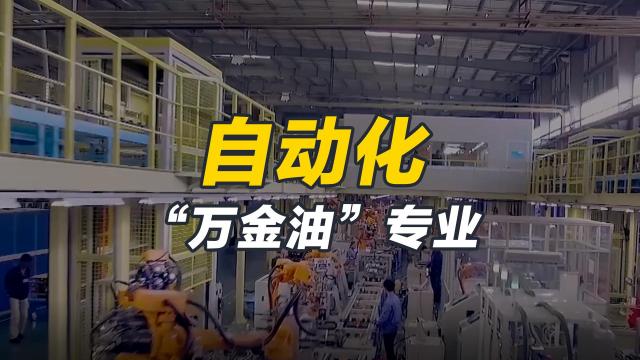
Automation: The "Universal" Major(from:教育话合物)
02:10

Automation is an undergraduate major in Chinese regular institutions of higher education, belonging to the Automation Category. It has a standard duration of four years, awarding a Bachelor of Engineering degree. The Automation major in China originated from one of the first majors established during the nationwide reorganization of higher education institutions in 1952, named "Industrial Enterprise Electrification".
1
This major takes Automatic Control Theory as its primary theoretical foundation and employs electronic technology, computer information technology, sensor and detection technology, among others, as its main technical means to control various automated devices and systems. It is a comprehensive discipline that integrates computer hardware with software, mechanics with electronics, components with systems, and operation with manufacturing, representing a fusion of control, computer, electrical, and mechanical engineering. The program emphasizes a solid theoretical foundation for students, highlights practical skills, and pays attention to strengthening the cultivation of students' innovative capabilities in engineering technology.
3
- Chinese Name
- 自动化
- Discipline Category
- Engineering
- Category
- Automation Category
- Duration of Study
- Four years
- Major Code
- 080801
- Degree Awarded
- Bachelor of Engineering
- Program Level
- Undergraduate
Development History
In the 1950s, shortly after the founding of the People's Republic of China, with all sectors in need of revival, the higher education system was established by learning from the Soviet model, featuring specialized and subdivided majors. Accordingly, corresponding to the needs for automation in national industrial construction and automatic control in national defense and military construction, the majors "Industrial Enterprise Electrification" and "Automatic Control" were successively established (at that time, in many institutions, the "Automatic Control" major was a classified program; in its early stages, it was also referred to as the "Automatics and Telemechanics" or "Automatic Control Systems" major).
In the 1960s, the name of the "Industrial Enterprise Electrification" major was changed to "Industrial Electrification and Automation".
In the late 1970s, when enrollment resumed, "Industrial Electrification and Automation" was changed again to the "Industrial Electrical Automation" major.
In 1993, after four years of work on the third nationwide revision of the undergraduate program directory, the State Education Commission promulgated the "Undergraduate Program Directory of Regular Higher Education Institutions", described as "systematic, relatively scientific and rational, unified, and standardized". The two majors "Industrial Electrical Automation" and "Production Process Automation" were merged to establish the "Industrial Automation" major, which belonged to the Electrical Engineering category. It was placed under the purview of the then Ministry of Mechanical Industry, which established the Higher Education Industrial Automation Teaching Guidance Subcommittee responsible for the teaching guidance of the "Industrial Automation" major nationwide. Concurrently, the "Automatic Control" major was categorized under the Electronic Information category and placed under the purview of the then Ministry of Electronics Industry, which established the Higher Education Automatic Control Teaching Guidance Subcommittee responsible for the teaching guidance of the "Automatic Control" major nationwide. This program adjustment further clarified the common characteristics and educational objectives of the "Industrial Automation" and "Automatic Control" majors, which were "emphasizing both high and low voltage, balancing hardware and software, combining control theory with practical systems, and focusing on motion control, process control, and other object control". It also essentially established the distinct professional characteristics and division of labor: the "Industrial Automation" major leaned towards high voltage and application, while the "Automatic Control" major leaned towards low voltage and theory.
In 1995, the State Education Commission promulgated the "Guidance Directory of Engineering Undergraduate Programs (for Higher Education Institutions)", merging the "Industrial Automation" major from the Electrical Engineering category with the original "Automatic Control" major from the Electronic Information category to form the new "Automation" major under the Electronic Information category. As this was a guidance directory and not mandatory, and because merging the "Industrial Automation" major—which emphasized both high and low voltage—into the Electronic Information category, which primarily focused on low voltage, was seen as detrimental to the major's development, many institutions maintained the coexistence of both the "Industrial Automation" and "Automatic Control" majors. Furthermore, in 1996, the national Ministry of Education again entrusted the Ministry of Mechanical Industry and the Ministry of Electronics Industry to establish new (i.e., the second) rounds of their respective teaching guidance subcommittees for higher education institutions, which meant this guidance directory was not effectively implemented.
9
In 1998, the Ministry of Education promulgated the "Comparison Table of Old and New Undergraduate Programs in Regular Higher Education Institutions (1998 Edition)". It merged the original majors: Fluid Transmission and Control (part) (Major Code 080312), Electrical Technology (part) (Major Code 080605), Industrial Automation (Major Code 080604), Automation (Major Code 080607W), Automatic Control (Major Code 080711), and Aircraft Guidance and Control (part) (Major Code 081806) into the Automation major. The new major code was 080602, belonging to the Electrical Information category under the discipline of Engineering.
6
On September 14, 2012, the Ministry of Education issued the "Undergraduate Program Directory of Regular Higher Education Institutions (2012 Edition)" and formulated the "Comparison Table of Old and New Undergraduate Programs in Regular Higher Education Institutions". The original Automation major (Major Code 080602) was split and re-established separately as Automation (Basic Major, Major Code 080801) and Rail Transit Signal and Control (Specialty Major, Major Code 080802T). Both belong to the Automation Category under the discipline of Engineering.
1
On February 21, 2020, the Ministry of Education promulgated the "Undergraduate Program Directory of Regular Higher Education Institutions (2020 Edition)". The Automation major is a program under the discipline of Engineering, with the major code 080801, belonging to the Automation Category. It awards a Bachelor of Engineering degree and has a four-year duration of study.
8
Training Objectives
The Automation major aims to cultivate high-quality specialized technical talents with strong employability in relevant fields. Graduates should possess good morality and cultivation, comply with laws and regulations, and have awareness of social and environmental responsibilities. They are expected to master essential foundational knowledge in mathematics and natural sciences, as well as the fundamental theories, methods, and skills related to the field of Automation. They should develop sound scientific thinking abilities and the capability to solve engineering problems within the Automation domain, function effectively within a team, and possess well-rounded comprehensive qualities. They should be able to expand their capabilities through continuing education or other lifelong learning pathways, stay informed about and keep pace with the development of the discipline and major, and be competent in work such as research, design and development, deployment, and application of Automatic Control Systems.
1
Training Specifications
- Duration of Study and Degree
| Duration of Study | 4 years |
| Degree Awarded | Bachelor of Engineering |
| Recommended Total Credit Hours or Credits | It is recommended that the total credits range from 140 to 180, with the graduation project (thesis) requiring at least 8 credits (or no less than 8 weeks). |
| References 1 | |
- Basic Requirements for Talent Cultivation
1. Ideological, Political, and Moral Education
To be implemented in accordance with the unified requirements of the Ministry of Education.
2. Professional Competence
- Master the natural science knowledge such as mathematics and physics required for working in the field of automation, as well as the fundamental technical knowledge in electronics and electrical engineering, computer and communication, and instrumentation. Possess basic knowledge in humanities and social sciences such as preliminary engineering management, resource conservation, environmental protection, society, and law.
- Master the fundamental principles and strategies of detection, modeling, control, and optimization within the professional field. Master the basic principles and methods of information processing and network technology within the professional field. Understand the frontiers and development trends in the field of automation.
- Understand the general methods for analyzing and designing engineering control systems. Possess the basic professional ability to select appropriate technologies, resources, and modern tools to solve control problems in general engineering systems. Possess the basic ability to independently operate, manage, and maintain a specific practical engineering control system.
- Possess the ability to analyze, improve, optimize, and design the technology within automation systems or products.
- Possess an awareness of innovation and the preliminary ability to research, develop, and design new automation products, processes, technologies, and equipment.
- Understand the technical standards within the Automation Category professional field and relevant industry regulations. Possess professional ethics and a sense of social responsibility.
- Possess the ability to adapt to development, a correct understanding of lifelong learning, and learning capabilities.
- Possess strong abilities in communication, environmental adaptation, and teamwork.
- Possess a certain degree of international perspective. Master at least one foreign language, be proficient in reading foreign language literature in the automation field, and be capable of cross-cultural communication and exchange.
3. Physical Education
To be implemented in accordance with the unified requirements of the Ministry of Education.
1
Curriculum System
Overall Framework
The curriculum system for the Automation major can be constructed with reference to the following principles:
- The credit hours for theoretical teaching should not be less than 70% of the total credit hours. The theoretical teaching part includes two main blocks: general education and professional education. Among these, general education is a compulsory module, comprising two parts: public education and general education. Public education includes courses such as ideological and political theory, foreign languages, physical education, and computer science. General education includes: ① humanities education; ② social sciences education; ③ natural sciences and engineering education. The professional education curriculum should contain a certain proportion of compulsory and elective content.
- The credit hours for practical teaching should not be less than 25% of the total credit hours. This mainly includes: ① general education practice; ② course experiments; ③ comprehensive course design; ④ professional internship; ⑤ graduation project (thesis), etc. Schools with the necessary conditions may include elective content in professional practical teaching.
- The credit hours for other various activities should not be less than 2% of the total credit hours. Each university can organize and carry out various activities according to its specific circumstances, including: ① academic and technological activities, such as various academic events, lectures, and subject competitions organized both on and off campus; ② cultural and sports activities, such as various artistic and sports events; ③ optional activities, encouraging universities with the necessary conditions to conduct personalized activities like interdisciplinary training, innovation and entrepreneurship education, and integrated undergraduate-graduate training.
Theoretical Courses
- General Knowledge
General knowledge includes two parts: public education and general education. Based on the teaching content stipulated by the state, each university can determine the specific content of the public education part according to its own positioning and talent cultivation objectives. This specifically includes humanities and social sciences, foreign languages, computer and information technology, physical education, arts, etc.
The general education part can appropriately increase the teaching requirements for natural sciences as needed. That is, depending on different talent cultivation orientations, it should strengthen students' necessary foundation in advanced mathematics, engineering mathematics, and university physics, cultivating and enhancing their comprehensive quality in clearly expressing concepts, skillfully performing derivations and calculations, and flexibly applying learned mathematical and physical knowledge to solve professional problems.
1
- Foundational Disciplinary Knowledge
Referring to the basic requirements formulated by the relevant curriculum teaching steering committee of the Ministry of Education, and without falling below these requirements, the foundational disciplinary and professional knowledge must cover subjects closely related to electrical information and automation science and technology, such as circuit theory, electronic technology, programming, computer networks, etc., including their development history and current status.
1
- Professional Knowledge
The Automation major includes professional knowledge such as principles of automatic control, modern control theory, optimization methods, detection technology and instrumentation, computer hardware and software technology, microcomputer principles, system optimization, system design and simulation, sensors and actuators, intelligent information processing, etc., along with their development history and current status. Different professional courses must cover the corresponding knowledge domains. Regarding content related to the specific orientation of the major, each university can appropriately select and supplement based on its own characteristics.
1
Practical Teaching
Each university should have a comprehensive practical teaching system that meets teaching needs, mainly including general education practice, course experiments, comprehensive course design, professional internship, graduation project (thesis), and other various scientific and technological innovation activities.
- General Education Practice: Should cultivate students' basic engineering hands-on ability and fundamental practical skills, including military training, electronic craft practice, metalworking practice, etc.
- Course Experiments: Combined with the corresponding theoretical teaching content and according to the teaching requirements of different courses, corresponding demonstration, verification, and comprehensive experiments should be provided.
- Comprehensive Course Design: A practical teaching component integrating multiple knowledge points or domains, which must involve professional skill training such as system analysis, design, and debugging.
- Professional Internship: Conducts necessary engineering and technical training, which may include activities such as certain social practice, on-site enterprise visits, and practical training.
- Graduation Project (Thesis): Guides students to conduct design-oriented learning and research according to specific requirements in a particular area, based on practical engineering problems in the Automation field, and to write a research paper or engineering design report. The topic selection should align with the professional training objectives and have a clear application background. The process of the graduation project or thesis writing should cultivate students' engineering awareness, collaborative spirit, and the ability to comprehensively apply learned knowledge to solve practical problems. For graduation projects (theses) with practical engineering problems as topics, guidance and assessment from enterprise or industry experts should be incorporated.
Teaching Conditions
Faculty
- Requirements for the quantity and structure of the faculty
- The quantity and structure of the professional faculty must meet the standards for the qualification assessment of undergraduate teaching in regular higher education institutions.
- The quantity and structure of full-time teachers meet the needs of professional teaching, with a student-to-faculty ratio not exceeding 18:1.
- For newly established programs, there should be at least 10 full-time teachers (excluding professional laboratory instructors teachers). For every additional 40 students beyond the base of 120 students, one additional full-time teacher must be added (excluding professional laboratory instructor teachers).
- A certain number of professional laboratory instructor teachers must be allocated, with the ratio of undergraduate students to professional laboratory instructor teachers not exceeding 150:1.
- The proportion of full-time teachers holding a master's degree or above and the title of lecturer or higher should be no less than 90%, and the proportion of teachers with doctoral degrees should be gradually increased.
- The proportions of professors under the age of 55 among all professors and associate professors under the age of 40 among all associate professors should be appropriate, with a relatively high proportion of young and middle-aged key teachers.
- The academic leaders should have relatively high academic attainments, with a reasonable distribution of specialties. The disciplinary team should be well-organized, with a reasonable age and knowledge structure within the academic echelon, and a suitable number of key teachers to provide basic faculty support for the program's development.
- There should be enterprise or industry experts serving as part-time teachers.
- Requirements for teacher background and proficiency
- Professional Background: The majority of teaching faculty (no less than 60%) should have at least one stage of their academic background in an Automation Category program. Some teachers should have experience studying in related fields. Where conditions permit, institutions should appropriately introduce full-time and part-time faculty with interdisciplinary backgrounds related to the Automation field, to facilitate the program's further development and broadening.
- Engineering Background: Among teachers engaged in engineering application teaching, a considerable proportion should have work experience in enterprises or have undertaken engineering projects. The institution should take effective measures to strengthen the cultivation of engineering practical abilities for teachers with master's and doctoral degrees (especially doctoral degrees).
- Scientific Research: Full-time teachers should possess the capability to undertake scientific research projects within the Automation field, including projects from national, provincial (ministerial), research institute, and enterprise sources. The results achieved should be published in important domestic and international academic journals and conferences, or through patent and software copyright registrations, etc.
- Environment for Faculty Development
Professional teachers should have a sense of responsibility and mission for teaching and nurturing students, devote sufficient time and energy to undergraduate teaching and student guidance, and actively participate in teaching research and reform. The teaching workload for each full-time teacher for the program's students should be no less than 2 credits per academic year (including practical teaching components). Each professor and associate professor should teach at least one complete undergraduate course per year.
The institution should provide a good working environment and conditions for the professional teachers, creating a favorable environment and atmosphere for the program's construction and development. There should be a plan for faculty development; plans for enhancing teachers' academic capabilities and teaching levels; support and guarantees for teacher further training and participation in academic exchanges; specific plans for cultivating young teachers; specific measures for improving teachers' engineering abilities; policies encouraging and supporting teachers in conducting teaching research and reform and guiding students; and a system with clear requirements for teaching quality.
1
Equipment and Resources
- Teaching Facilities
- Classrooms and laboratories should meet teaching needs in terms of quantity and function, with good management, maintenance, and update mechanisms.
- The experimental equipment should be complete, sufficient in quantity, and of excellent performance to meet the needs of various teaching experiments. For principle demonstration and verification experiments, there should be no more than two students per group. For comprehensive experiments, the tasks assigned to each group of students should be differentiated.
- Ensure that students' needs for computer use, internet access, and experiments for both in-class and extracurricular learning are met.
- Experimental equipment should be maintained by dedicated personnel to ensure that experiments proceed smoothly according to plan.
- There should be stable enterprise internship bases. For internships or classes conducted at enterprises, education on industry standards, norms, and safety must be provided.
- Encourage enterprises to jointly establish laboratories with universities, and encourage the establishment of platforms for various levels and types of science and technology competitions to create a more relaxed learning environment for students.
- The content of the graduation project (thesis) must fall within the academic scope of the Automation major, with one topic per student. A certain proportion of topics should be integrated with engineering practice. For graduation projects (theses) conducted at enterprises, in addition to a supervisor from the university, there must also be a supervisor from the enterprise.
- Information Resources
A variety of textbooks and professional reference books that meet the needs of the professional training program should be provided, and they should be easily accessible and usable by teachers and students. Reading environments such as libraries and study rooms should be good. Well-established campus network facilities should be in place to provide students with conditions for accessing learning materials through modern information technology.
1
Teaching Funds
- Teaching funds must be guaranteed to meet the needs of professional teaching, construction, and development, and should not be lower than the per-student indicator stipulated by the qualification assessment standards for undergraduate teaching in regular higher education institutions.
- The annual regular teaching funds for established majors should include expenses for faculty development, personnel work, laboratory maintenance and renewal, professional practice, library materials, internship base construction, graduation project (thesis), etc.
- For newly established majors, a certain amount of start-up funding, excluding fixed asset investment, must be guaranteed, with particular emphasis on laboratory construction funds.
Quality Assurance
- Requirements for the Teaching Process Quality Monitoring Mechanism: Universities should establish a quality monitoring mechanism for major teaching links (including theoretical courses, experimental courses, etc.), ensuring that the implementation process of these major links is under effective monitoring. Each major teaching link should have clear quality requirements. A regular evaluation mechanism for the curriculum system setup and the teaching quality of major teaching links should be established, with due attention paid to the opinions of students and experts from both inside and outside the university during evaluation.
- Requirements for the Graduate Tracking and Feedback Mechanism: Universities should establish a graduate tracking and feedback mechanism to promptly understand graduate employment destinations and quality, graduate career satisfaction and sense of accomplishment, employer satisfaction with graduates, etc. Scientific methods should be used to statistically analyze the graduate tracking feedback information and generate analysis reports, which serve as the primary basis for quality improvement.
- Requirements for the Continuous Improvement Mechanism for the Major: Universities should establish a continuous improvement mechanism. In response to existing problems and weaknesses in teaching quality, effective corrective and preventive measures should be taken for continuous improvement, thereby constantly enhancing teaching quality.
Training Model
- The "Three-Chain Linkage, Three-Stage Progression, and Three-Axis Drive" training model for cultivating leading talents in engineering disciplines in the new era
1. "Curriculum-Faculty-Textbook" Three-Chain Linkage, Solidifying the Foundation
- Adhering to ideological and political guidance, integrating theoretical and practical education, and constructing a first-class curriculum chain. Actively carry out ideological and political education, guiding undergraduate students to establish Socialist Core Values. Develop an "Automation+X" curriculum scheme, where "X" includes interdisciplinary courses such as "Fundamentals of Software Technology" (32 credit hours), "Fundamentals of MEMS" (32 credit hours), "Big Data Processing" (32 credit hours), and "Computer Network Technology" (32 credit hours), as well as distinctive ideological and political courses like "Introduction to Xi Jinping Thought on Socialism with Chinese Characteristics for a New Era" (36 credit hours). Actively optimize online courses, develop national-level first-class online courses and virtual simulation experiment teaching courses. Through online teaching and simulation exercises, enhance students' practical operational skills, comprehensively solidifying the ideological, political, and knowledge foundation of undergraduates.
- Adhering to guidance by renowned teachers, integrating excellent mentor resources from within and outside the university, and building a high-quality faculty chain. Establish a mechanism for introducing and cultivating the engineering faculty team. Internally, increase efforts to cultivate outstanding teaching teams for undergraduates; externally, absorb excellent mentor resources from both within China and abroad. Hire enterprise engineers and innovation/entrepreneurship mentors as off-campus instructors, building a "tripartite" faculty team covering entrepreneurial, academic, and engineering types, and conduct teaching from multiple aspects such as innovation, entrepreneurship, and engineering practice.
- Adhering to the guidance of the new era, integrating self-compiled textbooks and selected textbooks, and constructing a high-quality textbook chain. The professional teaching team focuses on cutting-edge technological fields, gains insight into industry development prospects, promotes textbook updates, independently compiles national planning and key textbooks, and builds a characteristic textbook system for the Automation major. In the teaching process, integrate self-compiled textbooks and selected textbooks, balancing the needs of era development and course requirements.
2. "Experiment-Training-Internship" Three-Stage Progression, Enhancing Capabilities
- Design the experimental system around course objectives. According to the characteristics of engineering disciplines and actual engineering processes, construct an experimental teaching system of "Discipline Core + Discipline Category Core + Major Core + Major Elective". This includes Discipline Core Experiments (2 credits), Discipline Category Core Experiments (3 credits), Major Core Experiments (3 credits), and Major Elective Experiments (1 credit), totaling 9 credits. Efforts are made in both reforming traditional experiments and promoting new types of experiments, comprehensively enhancing students' comprehensive application abilities.
- Construct the practical training system around engineering projects. Innovate the content of engineering practice education, implement a "basic training + optional projects" practical training model characterized by "engineering projects as the main line, teachers as the guide, and students as the main body". Optional projects focus on core technologies, covering strategic scientific and technological points such as new energy, carbon neutrality, and "Internet+", aligning with international technological frontiers, and exercising students' practical operational skills.
- Build the internship system around industry needs. Improve the university-enterprise-local government collaboration system. Local governments provide funding and policy support, universities provide talent and basic education, and enterprises provide venues and frontline guidance. Through deep collaboration among universities, enterprises, and local governments, jointly create four major internship modules: "Cognitive Internship + Production Internship + Enterprise Internship + Graduation Internship". The total internship duration reaches over 192 hours, enhancing students' practical application abilities.
3. "Research-Competition-Exchange" Three-Axis Drive, Elevating Competence
- "Open Platform + Multidimensional Resources", deploying the research axis. Relying on national-level research platforms and practical teaching bases, establish a comprehensive, multi-disciplinary integrated, and heterogeneous teaching practice platform. Actively involve undergraduate students in national-level research projects, lower the research threshold for engineering undergraduates, and encourage students to "dare to research, be able to research, and know how to research".
- "Dual Discipline Competitions + Dual Mentors from University and Enterprise", arranging the competition axis. Strengthen the guiding role of competitions. Based on professional discipline competitions such as the National Undergraduate Electronic Design Contest, National Undergraduate Intelligent Car Competition, and China Robot Competition, leverage the leading role of the three major innovation and entrepreneurship competitions: the "Internet+" College Student Entrepreneurship and Innovation Competition, the "Challenge Cup" National Undergraduate Curricular Academic Science and Technology Works Competition, and the "Chuangqingchun" National Undergraduate Entrepreneurship Competition. Build a "University-Province-National" three-level competition and training system. Deepen the "Dual Mentors from University and Enterprise" training model, strengthen the organic integration and transformation of research training outcomes, enterprise joint projects, and competition projects, gradually cultivating students' innovation awareness.
- "Academic Frontiers + International Perspective", deepening the exchange axis. Invite domestic experts and scholars to the college to conduct academic lectures, focusing on domestic research frontiers and challenges, fostering students' sense of responsibility, and encouraging students to visit domestic universities for short-term study visits and academic exchanges to exercise their communication skills. Regularly organize international academic exchange conferences, arrange for foreign scientists and students to have face-to-face or online exchanges, actively recommend students to participate in summer study programs at prestigious overseas universities, attend international conferences, etc., to expand students' international horizons from multiple dimensions.
Representative Institution:
10
Hunan University- Innovative Talent Cultivation Model under the "Emerging Engineering Education" Concept
Approach:
- In terms of the discipline system, pursue "breaking the old and establishing the new, complementing strengths": To cultivate talents for emerging engineering fields, the primary task is to address the ossification of the discipline system, boldly "break the old and establish the new", adjust old majors and establish new ones by combining industrial development needs and the university's strengths, accelerating the layout of emerging engineering disciplines. Secondly, emerging majors should discard the imprint of the traditional industrial era. While considering classical theoretical foundations, they should closely follow industrial development trends, promptly adjust training plans, optimize curriculum design, adhere to the "student-centered" philosophy, expose students to new concepts, new tools, and new frontiers, and enhance their innovation awareness.
- In terms of practical platforms, promote "university-enterprise cooperation, resource sharing": First, it is necessary to cultivate the practical awareness and abilities of university teachers. Through activities such as "young teachers going to the grassroots, enterprise executives entering the classroom", promote enterprises and universities to jointly build practical platforms, create demonstration bases for industry-university-research cooperation, and jointly cultivate application-oriented talents with both theoretical and practical excellence. Secondly, construct a multi-level "practical resource sharing pool", gathering resources from universities, enterprises, and research institutes, improving resource sharing mechanisms and promotion/application mechanisms, to promote high-quality practical teaching at the lowest cost.
- In terms of teaching methods, skillfully use "combining old and new, innovating upon the old": In the information age, engineering universities should focus on combining old and new channels for knowledge acquisition. Centered on students and guided by classroom teaching, strengthen students' ability to acquire knowledge independently. Explore "diversified" talent cultivation models, adopting methods such as combining course learning with project-based learning, inquiry-based and small-class seminar learning, MOOC/SPOC + Flipped Classroom teaching reform models, university-enterprise collaborative education and enterprise internships, transnational exchange learning and international joint talent cultivation models, etc. Innovate upon the old to cultivate new engineering talents that meet the demands of the times.
Practice:
- Modernization of the Discipline System: To optimize the structure of the discipline system and make it more aligned with industrial development. Automation courses are integrated, new professional course modules are established, and the flexibility of talent cultivation is enhanced, striving to achieve integration with industry. Practical teaching plans such as the "Excellent Engineer Education Plan" are implemented, integrating scientific research training into the compulsory components of general education, and encouraging the implementation of a joint talent cultivation model with "dual mentorship from both university and enterprise." Emphasis is placed on using discipline competitions as a driving force to enhance students' innovative and practical skills.
- Modernization of Practical Platforms: To strengthen the construction of practical platforms and make them better suited to modern demands. High-end public platforms for teaching and research are established, including national-level virtual simulation experimental teaching centers, provincial-level experimental teaching demonstration centers, experimental teaching demonstration centers under the Ministry of Industry and Information Technology/Ministry of Education, as well as provincial-level key laboratories and provincial-level engineering research centers. Focus is placed on cooperation with enterprises, guiding university-enterprise strategic partnerships towards more sustainable development.
- Diversification of Teaching Methods: To enrich educational and teaching methods and make them more adaptable to diversified teaching. A course teaching system centered on "learning" based on the information age and a teaching evaluation system oriented towards learning outcomes are constructed, with courses designed according to needs. The internationalization of training programs is actively promoted. Provincial-level and university-level brand majors should design their programs by referencing the training programs of related majors in foreign universities. All majors should achieve the capability for over 50% of their professional education courses to be taught entirely in English.
Representative Institution:
11
Nanjing University of Science and Technology- Talent Cultivation Model under the Engineering Education Accreditation System
- Aiming for the coordinated development of knowledge, ability, and quality. To achieve this goal, the curriculum system needs to be redesigned: First, a comprehensive knowledge system. Within the automation curriculum system, emphasis is placed on public foundational knowledge, technical foundational knowledge, and professional knowledge related to engineering technology. Second, creating an atmosphere that simulates actual social working conditions. Integrating experimental teaching with engineering practice, and considering actual work processes when designing courses. Third, rationally arranging teaching content and increasing practical intensity. With the goal of cultivating students' engineering practical ability, considerations are made on how to arrange the teaching process, reasonably plan the credit hours for theoretical teaching and practical teaching, and appropriately increase extracurricular learning and practice time.
- Reforming the teaching mode and updating teaching content. Efforts are made to solidly strengthen the construction of engineering education platforms, internship bases, and faculty teams, creating an engineering teaching model with the characteristics of a forestry university. Simultaneously, an effective operational system, quality evaluation, and supervision mechanism for engineering education are constructed. Guided by a service-oriented philosophy, teaching content is updated to actively adapt to the needs of national and regional economic construction, cultivating engineering and technical talents who are suited to the construction of China's socialist modernization, possess an international perspective, and have innovative capabilities.
- Strengthening the cultivation of engineering practical ability. Constructing a progressive, multi-integrated practical teaching system: rationally arranging practical teaching links both inside and outside the classroom, and inside and outside the university, ensuring off-campus internship bases with relatively rich practical levels, high teaching standards, and stable cooperative relationships. Guided by the educational theory of "Learning by Doing" by American educator John Dewey, a working environment and professional atmosphere are created, making competition, self-directed learning, and hands-on practice a norm. On the basis of mastering theoretical knowledge, students enhance their practical ability to apply knowledge.
- Strengthening comprehensive quality and ability education. In the talent cultivation process, guided by the theory of all-round development, emphasis is placed on cultivating students' comprehensive qualities and abilities. Guided by the Socialist Core Values, students are guided to establish a correct outlook on life and values, develop proper moral concepts and ways of thinking, with attention paid to cultivating abilities in communication, teamwork, and systems analysis.
Representative Institution:
12
Northeast Forestry UniversityDevelopment Prospects
Talent Demand
The Automation major is dedicated to cultivating broad-caliber, compound engineering and technical talents who are adaptable to the needs of socialist modernization construction and future societal and scientific development. These individuals should achieve comprehensive and harmonious development in morality, intelligence, physique, aesthetics, and personality, possessing a sense of conscience and social responsibility. They should have an innovative spirit, practical ability, and an international perspective. They must possess the fundamental theories of automatic control disciplines, master engineering and technical foundations and professional knowledge in areas such as automatic control, systems engineering, intelligent systems, motion control, industrial process control, power electronics technology, electronic and computer technology, and information processing. They should be capable of designing, developing, and integrating various automation devices and systems, as well as managing and making decisions for complex systems.
5
Graduate Study Directions
Control science and engineering , Control Theory and Control Engineering, Electrical Engineering, Control Engineering
3
Career Directions
Graduates of the Automation major can engage in scientific research, technological development, engineering design, system operation management and maintenance, education, and management decision-making in various sectors of the national economy, national defense, and scientific research. Their work may involve fields such as motion control, process control, manufacturing system automation, automation instrumentation and equipment, new sensors, artificial intelligence and robot control, information processing, intelligent buildings, complex networks, and computer application systems.
5
Institutions Offering the Program
| Region | Institution | |||
|---|---|---|---|---|
| Beijing | Tsinghua University | Beijing University of Civil Engineering and Architecture | Beijing Institute of Petrochemical Technology | North China University of Technology |
| Beijing Union University | Beijing Technology and Business University | China University of Petroleum, Beijing | North China Electric Power University | |
| Beijing Forestry University | Beijing University of Posts and Telecommunications | Beijing University of Chemical Technology | University of Science and Technology Beijing | |
| Beijing Institute of Technology | Beihang University | Beijing University of Technology | Beijing Jiaotong University | |
| Beijing Information Science & Technology University | Beijing Institute of Graphic Communication | Century College, Beijing University of Posts and Telecommunications | ||
| Tianjin | Tianjin Sino-German University of Applied Sciences | Tianjin University of Technology and Education | Tianjin University of Commerce | Tianjin University of Technology |
| Tianjin University of Science and Technology | Tiangong University | Civil Aviation University of China | Tianjin Chengjian University | |
| Tianjin University | Nankai University | Tianjin Ren'ai College | Tianjin Tianshi College | |
| Shanghai | Shanghai Maritime University | Shanghai Dianji University | University of Shanghai for Science and Technology | Shanghai University of Electric Power |
| Shanghai Polytechnic University | Shanghai University | East China University of Science and Technology | Tongji University | |
| Donghua University | Shanghai Institute of Technology | Shanghai University of Engineering Science | Shanghai Jiao Tong University | |
| Chongqing | Chongqing University of Technology | Chongqing University of Science and Technology | Chongqing Technology and Business University | Chongqing University of Posts and Telecommunications |
| Southwest University | Chongqing University | Chongqing College of Mobile Communication | Chongqing Institute of Engineering | |
| Hebei | North China University of Technology | Hebei University of Technology | Hebei University of Water Resources and Electric Engineering | Tangshan University |
| Xingtai University | Hebei Normal University of Science and Technology | Shijiazhuang Tiedao University | North China Institute of Science and Technology | |
| Hebei University of Engineering | Yanshan University | Hebei University | Cangzhou Normal University | |
| North China Institute of Aerospace Engineering | Hebei University of Science and Technology | Cangzhou Jiaotong College | Yanching Institute of Technology | |
| College of Modern Science and Technology, Hebei Agricultural University | Yanshan University Liren College | North China University of Technology College of Light Industry | ||
| Henan | Henan University of Animal Husbandry and Economy | Henan Institute of Technology | Zhengzhou University | Luoyang Institute of Science and Technology |
| Huanghuai University | Zhoukou Normal University | Shangqiu Normal University | Nanyang Normal University | |
| Zhengzhou University of Light Industry | North China University of Water Resources and Electric Power | Henan University of Technology | Henan Polytechnic University | |
| Henan University of Science and Technology | Henan University | Henan University of Urban Construction | Zhengzhou University of Aeronautics | |
| Nanyang Institute of Technology | Anyang Institute of Technology | Zhongyuan University of Technology | Sias University | |
| Zhengzhou University of Economics and Business | ||||
| Shandong | Linyi University | Shandong Institute of Petroleum and Chemical Technology | Binzhou University | Heze University |
| Shandong Technology and Business University | Weifang University | Shandong Jiaotong University | Qilu University of Technology | |
| Qingdao University | China University of Petroleum (East China) | Ocean University of China | Qufu Normal University | |
| Shandong Agricultural University | University of Jinan | Qingdao University of Technology | Qingdao University of Science and Technology | |
| Yantai University | Shandong University of Technology | Shandong University of Science and Technology | Shandong University | |
| Weifang Institute of Technology | Shandong Huayu University of Technology | Qingdao Institute of Technology | Shandong Xiehe University | |
| Qilu Institute of Technology | Yantai Nanshan University | Yantai Institute of Technology | Sino-German College of Technology, Qingdao University of Science and Technology | |
| Shanxi | Shanxi Institute of Technology | Shanxi Institute of Science and Technology | Shanxi Institute of Engineering and Technology | Jinzhong University |
| Taiyuan Institute of Technology | Shanxi Datong University | Taiyuan University of Science and Technology | North University of China | |
| Shanxi University | Taiyuan University of Technology | Shanxi Jinzhong Institute of Technology | ||
| Anhui | Anhui University | University of Science and Technology of China | Hefei University of Technology | Anhui University of Technology |
| Electronic Engineering Institute of the People's Liberation Army | Bengbu University | Hefei University | Tongling University | |
| Huangshan University | Suzhou University | Huainan Normal University | Anqing Normal University | |
| Anhui Jianzhu University | Anhui Polytechnic University | Anhui Normal University | Anhui University of Science and Technology | |
| Wanjiang Institute of Technology | Huaibei Institute of Technology | Ma'anshan University | Anhui Wenda Information Engineering University | |
| Anhui University of Information Engineering | Anhui Xinhua University | Anhui Sanlian University | Wanjiang College, Anhui Normal University | |
| Jiangxi | Jiujiang University | Yichun University | Gandong College | Gannan University of Science and Technology |
| Jingdezhen University | Nanchang Institute of Technology | Jingdezhen Ceramic Institute | Nanchang Hangkong University | |
| East China Jiaotong University | Jiangxi University of Science and Technology | Nanchang University | East China University of Technology | |
| Jiangxi Institute of Engineering | Nanchang Institute of Science and Technology | Science and Technology College of Nanchang Hangkong University | Science and Technology College of Nanchang University | |
| Jiangsu | Nanjing University | Southeast University | Hohai University | Wuxi College |
| Changshu Institute of Technology | Nanjing Xiaozhuang University | Jiangsu University of Technology | Nanjing Institute of Technology | |
| Jinling Institute of Technology | Huaiyin Institute of Technology | Nanjing University of Information Science and Technology | Changzhou University | |
| Nantong University | Jiangsu Normal University | Nanjing Tech University | Jiangsu University of Science and Technology | |
| Nanjing University of Posts and Telecommunications | Jiangsu University | Yangzhou University | Nanjing Normal University | |
| Nanjing University of Aeronautics and Astronautics | Nanjing University of Science and Technology | Nanjing Agricultural University | Jiangnan University | |
| China University of Mining and Technology | Suqian University | Yancheng Institute of Technology | Changzhou Institute of Technology | |
| Jiangsu Ocean University | Wuxi Taihu University | Sanjiang College | Nantong Institute of Technology | |
| Nanjing Tech University Pujiang College | China University of Mining and Technology Xuhai College | Nanjing University of Science and Technology Taizhou College of Science and Technology | ||
| Zhejiang | NingboTech University | Quzhou University | Lishui University | Zhejiang University of Science and Technology |
| China Jiliang University | Zhejiang Sci-Tech University | Hangzhou Dianzi University | Zhejiang University of Technology | |
| Zhejiang University | Zhejiang University City College | Zhejiang University of Water Resources and Electric Power | Shaoxing University | |
| Zhejiang College, Tongji University | ||||
| Hubei | Wuhan University | Huazhong University of Science and Technology | China University of Geosciences (Wuhan) | Wuhan University of Technology |
| Hubei Polytechnic University | Hubei Engineering University | Hubei University of Automotive Technology | Wuhan Polytechnic University | |
| Wuhan Textile University | Wuhan Institute of Technology | Hubei University of Technology | Wuhan University of Science and Technology | |
| Jianghan University | China Three Gorges University | Yangtze University | Huazhong Agricultural University | |
| Hubei Normal University | Wuhan City College | Jingzhou College | Wuhan Huaxia Institute of Technology | |
| Wuhan Donghu College | Wuchang Shouyi College | |||
| Hunan Province | Hunan University | Central South University | National University of Defense Technology | Hunan University of Humanities, Science and Technology |
| Hunan Institute of Technology | Shaoyang University | Hunan University of Arts and Science | Hunan Institute of Science and Technology | |
| Hunan Institute of Engineering | Central South University of Forestry and Technology | Hunan University of Technology | Nanhua University | |
| Xiangtan University | Hunan University of Science and Technology | Changsha University of Science & Technology | Hunan University of Information Technology | |
| Hunan International Economics University | ||||
| Guangdong | Dongguan University of Technology | Jinan University | South China University of Technology | Shenzhen Technology University |
| Guangdong Ocean University | South China Agricultural University | Guangdong University of Technology | Wuyi University | |
| Shenzhen University | Southern University of Science and Technology | Foshan University | Guangdong Polytechnic Normal University | |
| Shaoguan University | Jiaying University | Zhongkai University of Agriculture and Engineering | Guangdong University of Petrochemical Technology | |
| Guangzhou College of Applied Science and Technology | Guangzhou City University of Technology | Guangzhou College of Software Technology | Zhuhai College of Science and Technology | |
| Guangdong Technology College | Guangdong Baiyun University | Guangdong University of Science and Technology | Guangzhou Huali College | |
| Beijing Institute of Technology, Zhuhai | University of Electronic Science and Technology of China, Zhongshan Institute | |||
| Guangxi | Wuzhou University | Guilin University of Aerospace Technology | Beibu Gulf University | Guangxi University of Science and Technology |
| Guilin University of Technology | Guangxi University for Nationalities | Guilin University of Electronic Technology | Nanning Normal University | |
| Guilin Institute of Information Technology | Liuzhou Institute of Technology | |||
| Yunnan | Kunming University of Science and Technology | Yuxi Normal University | Honghe University | Jinqiao College, Kunming University of Science and Technology |
| Guizhou | Guizhou Institute of Technology | Liupanshui Normal University | Tongren University | Guizhou Minzu University |
| Guizhou University | Moutai Institute | Guiyang Institute of Information Science and Technology | ||
| Sichuan | Xihua University | Chengdu Technological University | Southwest Jiaotong University | Chengdu University |
| Chengdu University of Information Technology | Sichuan University of Science & Engineering | Southwest Petroleum University | Southwest University of Science and Technology | |
| University of Electronic Science and Technology of China | Panzhihua University | Mianyang City College | Sichuan Technology and Business University | |
| City College, Southwest University of Science and Technology | Jinjiang College of Sichuan University | |||
| Shaanxi | Chang'an University | Shaanxi University of Science and Technology | Xi'an Jiaotong University | Xi'an Aeronautical University |
| Northwestern Polytechnical University | Xidian University | Xi'an University | Xi'an Technological University | |
| Xi'an Polytechnic University | Xi'an Shiyou University | Xi'an University of Science and Technology | Xi'an University of Architecture and Technology | |
| Xi'an University of Technology | Yan'an University | Shaanxi University of Technology | Xi'an University of Posts and Telecommunications | |
| Xi'an Mingde Institute of Technology | Xijing University | City College of Xi'an Jiaotong University | ||
| Qinghai | Qinghai University | Kunlun College of Qinghai University | ||
| Ningxia | North Minzu University | Ningxia Institute of Science and Technology | ||
| Heilongjiang | Harbin Institute of Technology | Harbin Engineering University | Northeast Forestry University | Heilongjiang University |
| Suihua University | Daqing Normal University | Heilongjiang University of Science and Technology | Heilongjiang Institute of Technology | |
| Northeast Petroleum University | Harbin University of Science and Technology | Qiqihar University | Jiamusi University | |
| Harbin Institute of Information Technology | Harbin Huade University | Harbin Petroleum University | ||
| Jilin | Jilin University | Beihua University | Changchun University of Technology | Jilin Engineering Normal University |
| Jilin Institute of Chemical Technology | Jilin Jianzhu University | Changchun Institute of Technology | Northeast Electric Power University | |
| Jilin Agricultural University | Changchun University of Science and Technology | Changchun University | Changchun Institute of Electronic Technology | |
| Changchun University of Architecture | Changchun Sci-Tech University | Jilin University of Architecture and Technology | ||
| Liaoning | Dalian University of Technology | Dalian Ocean University | Dalian Maritime University | Bohai University |
| Yingkou Institute of Technology | Dalian Minzu University | Shenyang Aerospace University | Shenyang University of Chemical Technology | |
| Dalian Polytechnic University | Liaoning University of Technology | University of Science and Technology Liaoning | Dalian Jiaotong University | |
| Liaoning Petrochemical University | Shenyang Jianzhu University | Shenyang University of Technology | Liaoning Technical University | |
| Shenyang Ligong University | Northeastern University | Liaoning Institute of Science and Technology | Shenyang Institute of Engineering | |
| Shenyang University | Dalian University | Shenyang Institute of Technology | Dalian Institute of Science and Technology | |
| Shenyang Urban Construction University | ||||
| Xinjiang | Tarim University | Xinjiang University | Xinjiang Institute of Engineering | Changji University |
| Inner Mongolia | Inner Mongolia University | Ordos Institute of Applied Technology | ||
| Hainan | Hainan Normal University | Hainan University | ||
| Fujian | Xiamen University | Fuzhou University | Xiamen University of Technology | Xiamen Institute of Technology |
| Zhicheng College of Fuzhou University | Chengyi University College, Jimei University | |||
| Gansu | Lanzhou University of Technology | Lanzhou Jiaotong University | Lanzhou Institute of Technology | Hexi University |
| Longdong University | Lanzhou Institute of Information Science and Technology | Lanzhou Bowen College of Science and Technology | 4 | |
References
1.
教育部高等学校教学指导委员会 . 普通高等学校本科专业类教学质量国家标准上[M] . 北京:高等教育出版社 . 2018:315-320
2.
教育部关于公布2019年度普通高等学校本科专业备案和审批结果的通知 . 中华人民共和国教育部政府门户网站 . [2023-01-17]
3.
自动化 . 学职平台 . [2023-01-17]
4.
自动化【开设院校】 . 中国高校之窗 . [2023-01-17]
5.
通信工程学院:学行合一 德才兼备 . 吉林大学招生网 . [2023-01-17]
6.
普通高等学校本科专业目录新旧专业对照表(1998) . 中华人民共和国教育部政府门户网站 . [2023-01-17]
7.
教育部关于印发《普通高等学校本科专业目录(2012年)》《普通高等学校本科专业设置管理规定》等文件的通知 . 中华人民共和国教育部政府门户网站 . [2023-01-17]
8.
教育部关于公布2019年度普通高等学校本科专业备案和审批结果的通知 . 中华人民共和国教育部政府门户网站 . [2023-01-17]
9.
戴先中.我国自动化专业的特色、特点分析与发展前景初探[J].电气电子教学学报.2004,(03):1-5
10.
刘敏,王耀南,江未来,谭浩然.新时代工科专业领军人才培养模式的探索与实践——以湖南大学自动化专业为例[J].高等工程教育研究.2023,(01):80-84
Expand