Historical DevelopmentAncient BoxingModern BoxingChinese BoxingVenue and EquipmentVenueEquipmentRules of CompetitionWeight ClassesCompetition MethodReferee RulesNumber of RoundsOlympic Boxing RulesTerminologyPunchesDefenseJudging and ScoringWays to WinMajor CompetitionsProfessional boxingAmateur boxingOrganizationsProfessional Boxing OrganizationsAmateur Boxing OrganizationsRepresentative figuresMichael Gerard TysonRay RobinsonMuhammad AliRocky MarcianoBenny LeonardRay LeonardHenry ArmstrongJoe LouisDerivative Works
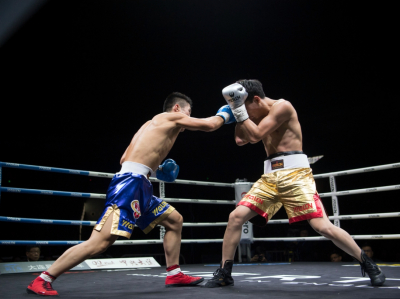
Boxing (English: Boxing, French: Boxe) is a Fight where participants wear boxing gloves. The two athletes engage in a confrontation using their fists, competing in terms of physical fitness, technique, and psychology. It includes both amateur (also known as Olympic boxing) and professional competitions. The objective of a match is to score more points than the opponent to win or to end the match by knocking the opponent down. Simultaneously, the competitors strive to avoid their opponent's strikes.
41
Records of boxing exist as early as the ancient Greek and Roman eras. Greek frescoes from 1500 BC depict scenes of boxing. In ancient times, when warriors boxed, they were allowed to use throws, strikes, kicks, stomps, and other actions until the opponent was killed, making it a brutal spectacle for the entertainment of slave owners. In the ancient Olympics, boxing was already one of the competition events. By the third modern Summer Olympics held in St. Louis, men's boxing was officially included as a competition event. The earliest boxing rules were established in 1743 by Jack Broughton, who dominated the British boxing scene from 1729 to 1750.
41
The governing bodies of boxing include: the Amateur Boxing Association (ABA), the British Boxing Federation (BBC), the European Boxing Confederation (EBC), the World Boxing Council (WBC), among others. Major competitions include Professional boxing, Amateur boxing, and Chinese domestic boxing competitions. Representative figures include: Ray Leonard, Henry Armstrong, Joe Louis, among others.
1
On March 20, 2025, local time, boxing was included as an official event for the Olympic Games Los Angeles 2028 .
43
- Chinese name
- 拳击
- Major events
- Professional boxing, Amateur boxing, Chinese domestic boxing competitions, etc.8
- Number of competitors
- two persons
- Representative figures
- Ray Leonard, Henry Armstrong, Joe Louis, etc.13
- Time of origin
- ancient times1
- Year of first inclusion in the Olympics
- 190440
- Place of origin
- Egypt1
Historical Development
Ancient Boxing
The origins of boxing can be traced back to Ancient Epochs. Archaeologists have found descriptions of "leather thongs" used for fistfighting in Egyptian hieroglyphs from the 40th century BC depicting warfare. Egyptian soldiers used these "leather thongs" to protect their bodies from injury, wrapping them from the shoulders and arms down to the fists for combat. Furthermore, numerous murals and stone carvings unearthed near Baghdad, depicting fistfighting, contain many records of the scenes and combat situations of that era. Boxing spread from Egypt to ancient Greece via Crete across the Mediterranean.
The development of ancient boxing was linked to the Ancient Olympic Games (776 BC to 394 AD). Around the 23rd Ancient Olympic Games in 688 BC, boxing was included as an official event, with the champion being the Greek Onomastus. At that time, athletes also competed using "leather thongs" made of oxhide wrapped around their finger joints and forearms. The athletes fought naked, anointed with olive oil, and competed without weight divisions. Some ancient pugilists included Taigenes, Wanfeimos, Glaucus, Podidamus, and Creitomachus.
1
Modern Boxing
On March 17, 2025, the International Olympic Committee (IOC) Executive Board recommended including boxing as an official sport in the 2028 Los Angeles Olympics.
43
On March 20, 2025, local time, the 144th IOC Session held in Greece decided to include boxing as an official sport in the 2028 Los Angeles Olympics.
44
Men's Boxing
Modern boxing was pioneered by the English pugilist James Figg (1695–1734), who became the first English bare-knuckle boxing champion in 1719. The earliest boxing matches were fought without gloves, had no rules or time limits, and continued until one participant was unable to continue.
In 1743, John Broughton (1704–1789), a professional boxer, sought to establish a boxing academy and drafted a set of academy bylaws and the first rules for boxing matches.
In 1747, John Broughton invented the first boxing gloves. He required his students to wear them during practice to prevent injuries and facial damage. However, it took a long time before matches with gloves became a mandatory rule in boxing.
The London Prize Ring Rules, promulgated in 1838, were based on John Broughton's original boxing rules and were revised in 1853.
In 1867, John Sholto Douglas, Marquess of Queensberry (the British boxing champion in 1858), compiled and published a set of rules. These rules stipulated: "Kicking, head-butting, biting, and wrestling moves are prohibited. A boxer knocked down must rise unaided within ten seconds, otherwise they are declared defeated." These rules were internationally recognized in 1891. Boxing was thus truly codified worldwide.
By the late 19th century, boxing had become popular in the Americas and Europe, exerting a certain social influence. Writers of the time, Jack London (author of The Game, which depicts a boxer's lifelong struggle) and George Bernard Shaw, contributed significantly to the sport's inclusion in the Olympic Games. Boxing was a demonstration sport at the 1904 St. Louis Olympics and became an official Olympic event in 1908. To ensure equal and fair competition, boxers were categorized by weight. Initially, there were only three weight classes: light, middle, and heavy. By the 19th Olympic Games, this had expanded to 11 classes. Olympic boxing matches consist of three rounds, each lasting three minutes, with one-minute rests between rounds. Professional boxing matches last up to 15 rounds.
14
In 1924, the International Amateur Boxing Federation was founded in Paris, France, on the eve of the 8th Olympic Games. Its first president was the American Jay Cady. The federation ceased operations during World War II, and a new International Amateur Boxing Federation was later re-established. Organizations such as the Amateur Boxing Association (ABA), the British Boxing Federation (BBC), the European Boxing Confederation (EBC), and the World Boxing Council (WBC) have all contributed to the development of boxing worldwide.
1
Women's Boxing
Women's boxing originated with a London women's boxing match in 1720. It gained global attention as a demonstration sport at the 1904 St. Louis Olympics.
In November 1993, Shenyang Institute of Physical Education established the first women's boxing team.
The first World Women's Boxing Championships were held in Scranton, USA in 2001.
In 2005, the International Boxing Association (AIBA) submitted an application report to include women's boxing in the Olympic Games. However, at that time, women's boxing was not sufficiently popularized globally, and there were not enough participating countries, ultimately leading to failure.
On August 13, 2009, the International Olympic Committee (IOC) held an executive committee meeting in Berlin and officially confirmed that women's boxing would become an event in the 2012 London Olympic Games.
At The 2010 Guangzhou Asian Games, women's boxing officially became an Asian Games event.
18
Chinese Boxing
Men's Boxing

Chen Hanqiang in a suit in the back row, Zheng Jichang second from left in the front row
In the 1930s, the Central Guoshu Academy and the National Guoshu Physical Education College under the Nanjing Nationalist Government listed it as one of their main courses.
2
In 1936, the 11th Olympic Games were held in Berlin, the capital of Germany. The Nationalist 32nd Army Boxing Team participated in the Olympic boxing competition. This was China's first professional boxing team.
Before the War of Resistance Against Japanese Aggression, schools run by churches included boxing as one of their physical education subjects.
In 1948, the 7th National Games held in Shanghai also included a boxing event.
In November 1953, a national folk-style sports performance and competition held in Tianjin featured a boxing competition.
In 1958, 21 cities held the largest-scale boxing competition of that time in Beijing.
In March 1959, the sport of boxing was suspended.
In December 1979, during Muhammad Ali's first visit to China, Deng Xiaoping pointed out that "boxing can also serve as a channel to enhance understanding and friendship between the Chinese and American peoples."
In 1980, the state permitted boxing to be tested within a certain scope.
In March 1986, the sport of boxing was officially resumed.
In 1986, the Chinese Boxing Association was established.
In June 1987, the Chinese Boxing Association officially joined AIBA.
In 1988, the Chinese national boxing team was formally established to prepare for The 1990 Beijing Asian Games.
In October 1990, Bai Chongguang won China's first Asian Games gold medal in boxing.
From April 1996 to August 1998, the first Chinese boxer Liu Gang participated in professional boxing matches in Australia, achieving a record of 1 win, 5 losses, 0 draws (1 win by KO).
On May 17, 2005, Chinese professional boxing promoter Liu Gang made history by producing four championship belts in a single match.
In November 2005, Shiming Zou won the first World Boxing Championship gold medal for China.
On July 28, 2007, Chinese boxer Wang Yanan captured the WIBA middleweight championship title.
In October 2007, the WBA held its annual convention in Chengdu.
On January 26, 2008, the first Chinese boxer Wang Yanan simultaneously won the WBC and WIBA championship titles.
At 2008 Beijing Summer Olympics, boxing achieved a "zero" breakthrough in Olympic gold medals for China, securing two golds, one silver, and one bronze. Shiming Zou won the gold medal in the men's 48 kg category, and Zhang Xiaoping won the gold medal in the men's 81 kg category.
In November 2008, the WBC held its annual convention in Chengdu.
From April to July 2010, China held its first professional boxing league. The competition featured only five weight classes and was conducted according to the rules of the International Boxing Association (AIBA). It was divided into Northern and Southern zones, with three clubs in each zone. The league awarded two prizes: a team championship and an individual championship; the team champion received a prize of 300,000 yuan, while the individual champion received 50,000 yuan.
At 2012 London Summer Olympics, Zou Shiming represented China and won the gold medal in the men's 49 kg category, successfully defending his title.
17
On November 24, 2012, in the first world championship title fight held in China, which took place in Kunming, XiongChaozhong from Wenshan, Yunnan, after 12 rounds of combat, defeated Mexican boxer Javier Martínez by a unanimous decision of 3-0, winning the WBC professional boxing mini flyweight (105 lbs) championship.
Women's Boxing
In August 2001, the Chinese women's boxing team participated in the first Asian Championships and achieved excellent results of two gold, three silver, and three bronze medals. In October of the same year, they took part in the first World Championships, where Zhang Maomao won the championship in the 54 kg category. At the second World Championships in 2002, Zhang Xiyan won the championship in the 54 kg category. On April 15, 2006, Zhang Xiyan became the first Chinese boxer to win the WIBA world professional boxing champion title.
3
At the The 2010 Guangzhou Asian Games, Ren Cancan won the first Asian Games women's boxing gold medal for China. In this Asian Games, the Chinese women's boxing team swept all the gold medals in the event.
At the 2012 London Summer Olympics, women's boxing was included as an Olympic event for the first time. Ren Cancan won the silver medal in the women's 51 kg category, which was also the first Olympic medal for Chinese women's boxing. Li Jinzi won the bronze medal in the women's 75 kg category.
At the 2016 Rio Olympics, the Chinese women's boxing team secured one silver and two bronze medals. Yin Junhua won the silver medal in the women's 60 kg category, Ren Cancan won the bronze medal in the women's 51 kg category, and Li Qian won the bronze medal in the 75 kg category.
18
At the Tokyo 2020 Olympic Games, Gu Hong won the silver medal in the women's 69 kg category. Li Qian won the silver medal in the women's 75 kg category.
26
In December 2021, the International Olympic Committee (IOC) announced the preliminary event program for the 2028 Los Angeles Olympics, and boxing was temporarily not included.
16
At the Olympic Games Paris 2024, Chang Yuan won the gold medal in the women's boxing 54 kg category, marking the first Olympic gold medal for Chinese women's boxing. Wu Yu won the gold medal in the women's 50 kg category. Li Qian won the gold medal in the women's 75 kg category. Yang Wenlu won the silver medal in the women's 60 kg category. Yang Liu won the silver medal in the women's 66 kg category.
20
On October 9, 2024, the International Olympic Committee (IOC) notified National Olympic Committees that boxing is currently not on the program for the 2028 Los Angeles Olympics, citing the absence of an IOC-recognized global boxing governing body for the sport.
28
In April 2025, the IOC Executive Board approved the sports program and athlete quotas for the 2028 Los Angeles Olympics, with boxing set to add one women's heavyweight category, ensuring an equal number of weight categories and athlete quotas for men and women.
45
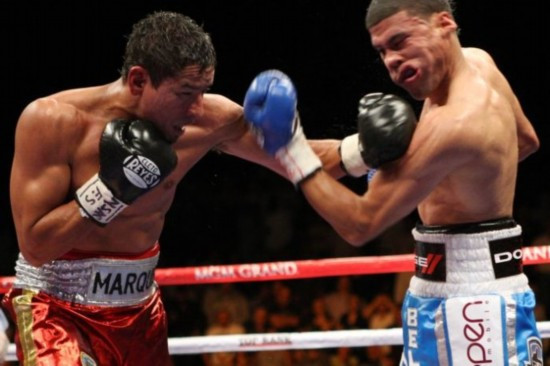


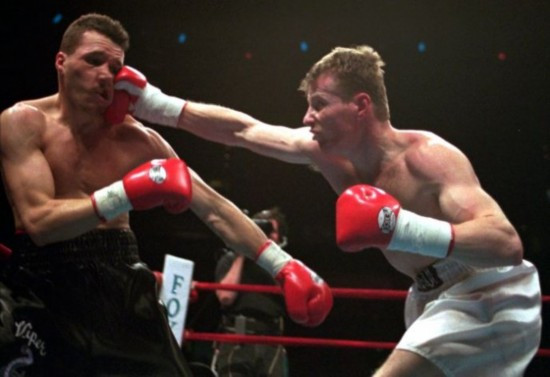
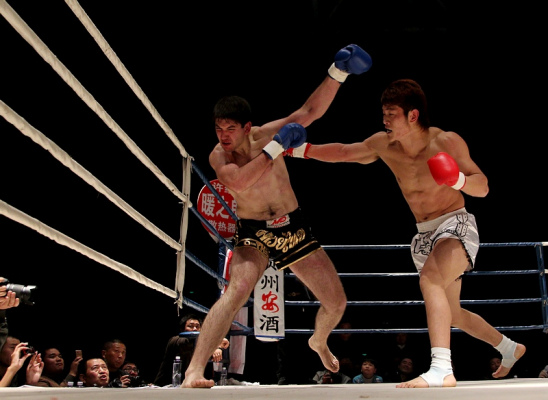


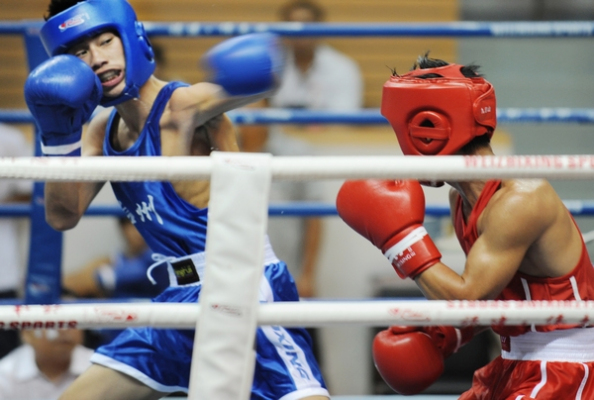

Boxing matches
Venue and Equipment
Venue
- Boxing ring
The International Boxing Association (AIBA) stipulates that the maximum size of a boxing ring for international official competitions such as International Boxing Championships, Olympic boxing, and the Boxing World Cup shall not exceed 6.10 meters square. For general competitions, the inside area of the ring ropes can range from 4.90 to 6.10 meters square, depending on specific circumstances.
A boxing ring has a special step in one of its neutral corners, which is reserved for the ringside doctor and the referee. Its other function is to prevent any contact between the two competing parties. Each of the four corners of the ring is equipped with soft pads that are 5 to 7 centimeters thick and 20 centimeters wide. There are two colors: red and blue. Typically, the pad on the left side of the referee's position is red, representing the red corner, while the diagonally opposite corner has a blue pad, representing the blue corner. The other two corners have white soft pads and are neutral corners. Plastic bags are placed at the neutral corners to hold the hemostatic cotton balls and gauze used by the referee.
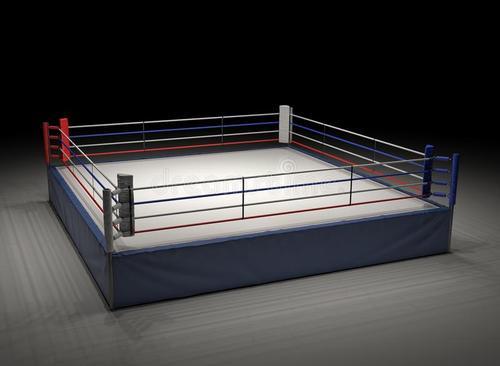

Boxing ring
Generally, a neutral zone is established around the boxing ring for the arbitration committee members and judges, where the results of the match will be determined. The neutral zone must also be enclosed by a barrier, and the distance between the barrier and the boxing ring should be no less than three meters. The arbitration seat faces the boxing ring. Judge No. 1's seat is positioned in front of the arbitration seat, with Judge No. 2's seat to its left. Opposite are the seats for Judges No. 3 and No. 4, and Judge No. 5's seat is placed on the right side. The distance between the judges' seats and the boxing ring is one meter, and the distance from the spectator seats to the referee should be at least two meters.
Due to the large scale and high number of participants in international or national boxing competitions, the organizers often set up two boxing rings for simultaneous matches. However, it is important to note that the two rings should not be placed too close to each other; the sound signals used to announce the start and end of the matches should be distinctly different; and each boxing ring should have its own independent arbitration committee to ensure the fairness of the competition.
Typically, there are three ropes between two adjacent posts of a boxing ring. The distances from the ring surface to each rope, from bottom to top, are 40 centimeters, 80 centimeters, and 130 centimeters respectively. Each rope is covered with a soft, smooth material to prevent abrasion injuries to the athletes. There is a 50-centimeter apron outside the ropes to prevent athletes from falling off the ring. To make the ropes more secure, two pieces of tightly woven canvas, each 3 to 4 centimeters wide, can be used around the perimeter for reinforcement. There are also boxing rings with four ropes between adjacent posts.
4
Equipment
- Hand Wraps
Standard hand wraps for boxing matches are 2.5 meters long and 5 centimeters wide. The host country of the European Boxing Championships, World Boxing Championships, World Cup Boxing Tournament, and Olympic boxing must provide wraps for each athlete for every match. The hand wraps are distributed by the glove steward along with the boxing gloves, and new wraps must be issued for each match. Competing athletes must use the wraps uniformly provided by the event. Hand wraps are generally made of highly absorbent cotton gauze; other types of fabric should not be used. When wrapping the hands, care should be taken to wrap the wrist area appropriately tighter, while the palm, fingers, and other parts should generally not be wrapped too tightly, as excessive tightness can restrict finger movement and affect the execution of technical skills. The method and sequence of wrapping the hand wraps can be followed accordingly.
4
- Boxing Gloves
According to the regulations of the International Boxing Association, boxers must wear boxing gloves when participating in boxing matches. Different weight gloves are used for different weight classes during matches: 226-gram gloves are used for the 48 to 67 kg categories, and 284-gram gloves are used for the 71 to 91 kg categories. Furthermore, during a boxing match, the organizing committee must prepare two pairs of gloves of the specified weights in case a replacement is needed if a problem arises with a boxer's gloves.
For international competitions, the gloves used by boxers must be inspected and approved by an AIBA representative before they can be used. Specialized gloves for boxing matches in China must be approved by the Chinese Boxing Association, and the gloves used by both boxers in a match must be products of the same manufacturer and model. Regulations stipulate that the knuckle part of the striking surface of the glove must be clearly marked in white, so that the referee and judges can determine whether the boxer is striking the opponent with the knuckle area. The gloves must not have any damage whatsoever. The laces must be tied at the back of the glove, with the excess length tucked into the cuff. The knot on the back of the glove must be covered with adhesive tape, which should not exceed 7.5 centimeters in length or 2.5 centimeters in width.
According to the rules, the ring referee must inspect whether both contestants are wearing gloves that comply with the regulations in each match; they must also check the softness and hardness of the glove padding and see if the gloves are damaged, etc. If any of the above issues are found, the referee should immediately have the boxer change gloves; the maximum time allowed for changing gloves shall not exceed two minutes, and it is generally one minute. If the laces on the gloves become loose during the match, the ring referee should help tighten them; however, if it is discovered that a boxer intentionally untied the laces, the ring referee should immediately issue a warning to that boxer.
4
- Boxing Attire
Boxing attire includes a vest, shorts, and soft-soled shoes. The vest should fit snugly but comfortably, and must not hinder the execution of technical movements. Boxing shorts should be loose and long, with the length reaching at least halfway down the thigh; the groin protector must not be exposed, nor should the shorts interfere with the match. Boxers must wear soft-soled shoes and ensure the laces are tied securely. If an issue arises with the attire during the match, the ring referee should immediately call a break; the athlete is given one minute to change, with the maximum change time not exceeding two minutes. Athletes should have several sets of spare attire prepared for such changes.
- Boxing Protective Gear
Boxing protective gear includes headgear, a mouthguard, and a groin protector. In amateur competitions, athletes must wear headgear. The specifications and style of the headgear for both athletes must be uniform, with one side red and the other blue, corresponding to their respective corners, and the boxing headgear used must be the unified model approved and recognized by the national boxing association. Protective gear is not worn in professional bouts or WSB matches. The rules stipulate that boxers must use a mouthguard during the match, and the size of the mouthguard must be appropriate for the competing boxer. If a boxer does not bring their own mouthguard, the host is obligated to provide one. Athletes are not allowed to intentionally spit out their mouthguard during the match, otherwise they will be warned. If the mouthguard is knocked out, the boxing referee in the ring will pick it up, take the boxer to their own corner, have an assistant rinse it clean, and then the boxing referee in the ring will refit it for the boxer. A boxer cannot arbitrarily change their mouthguard, and a match cannot proceed without a mouthguard being worn. Athletes must wear a groin protector; if the groin protector falls off or is damaged, it must be replaced and put back on promptly. If it cannot be replaced within one minute, the athlete may continue to fight the remainder of the round without it and then change it during the rest period. If the groin protector cannot be properly put on during the rest period, the match cannot continue.
4
Rules of Competition
The fundamental rules of boxing competitions consist of amateur boxing rules and professional boxing rules. The essential equipment for a boxer is boxing gloves. Therefore, whether participating in professional boxing or amateur boxing, each athlete must wear boxing gloves. Other equipment includes headgear, a mouthguard, boxing shorts, and a groin protector. The weight classes that boxers compete in are divided based on body weight. In March 2016, during a meeting in Lausanne, the International Olympic Committee (IOC) approved a proposal from the International Boxing Association (AIBA) to eliminate the use of headgear for men's boxing at the 2016 Rio Olympics, while women's boxing continued to use protective equipment.
30
Weight Classes
Amateur boxing weight classes (11 classes)
(1) Up to and including 48 kilograms;
(2) 51 kilograms (over 48 kg up to 51 kg);
(3) 54 kilograms (over 51 kg up to 54 kg);
(4) 57 kilograms (over 54 kg up to 57 kg);
(5) 60 kilograms (over 57 kg up to 60 kg);
(6) 64 kilograms (over 60 kg up to 64 kg);
(7) 69 kilograms (over 64 kg up to 69 kg);
(8) 75 kg class (over 69 kg to 75 kg);
(9) 81 kg class (over 75 kg to 81 kg);
(10) -91 kg class (over 81 kg to 91 kg);
(11) +91 kg class (over 91 kg).
Weight classes in professional boxing (17 classes)
(1) Heavyweight (over 201 lbs) Heavyweight class (over 91.25 kg)
(2) Cruiserweight (200 lbs) Junior heavyweight class (90.8 kg class)
(3) Light Heavyweight (175 lbs) Light heavyweight class (79.45 kg class)
(4) Super Middleweight (168 lbs) Super middleweight class (76.27 kg class)
(5) Middleweight (160 lbs) Middleweight class (72.64 kg class)
(6) Junior Middleweight/Super Welterweight (154 lbs) Super welterweight class (69.91 kg class)
(7) Welterweight (147 lbs) - 66.74 kg
(8) Junior Welterweight/Super Lightweight (140 lbs) - 63.56 kg
(9) Lightweight (135 lbs) - 61.29 kg
(10) Junior Lightweight/Super Featherweight (130 lbs) - 59.02 kg
(11) Featherweight (126 lbs) - 57.2 kg
(12) Junior Featherweight/Super Bantamweight (122 lbs) - 55 kg
(13) Bantamweight (118 lbs) - 53.57 kg
(14) Junior Bantamweight/Super Flyweight (115 lbs) - 52.21 kg
(15) Flyweight (112 lbs) - 50.84 kg
(16) Junior Flyweight/Light Flyweight (108 lbs) - 49.03 kg
(17) Mini Flyweight/Minimum Weight (105 lbs) - 48 kg
3. Weight Categories for World Youth Amateur Boxing Competitions (3 categories)
(1) Lightweight: under 58.97 kg
(2) Light middleweight: under 63.50 kg
(3) Middleweight: under 69.85 kg
5
Competition Method
1. Target Areas
Permissible target areas for scoring blows include the front and sides of the head, and the front and sides of the body above the waistline, but blows to the arms are not valid.
2. Scoring
(1) A clear, forceful blow delivered with the knuckle part of the closed glove to a legal target area of the opponent's body scores one point;
(2) A blow to a valid target area that is deemed not to be a power punch does not score;
(3) When two boxers are engaged in infighting and exchange fast, consecutive blows without either being able to deliver a sufficiently powerful punch, the boxer who gets the better of the exchange scores one point after the action concludes.
Fouls
Hitting Fouls
Hitting below the belt (low blow) or hitting an opponent with the head, shoulder, forearm, or elbow;
Hitting an opponent with an open glove, the palm, the heel of the hand, or the side of the glove;
Hitting an opponent on the back, especially the back of the neck and the back of the head;
Hitting an opponent on the kidneys;
Pivot blows or backhand blows.
Holding
Holding or pulling an opponent while striking;
Holding, locking, or pinning an opponent's arms or head; or intentionally placing an arm under an opponent's arm and not releasing it.
Tripping;
Kicking;
Butting with the head;
Choking or strangling;
Holding;
Biting;
Feinting;
Pushing;
Pressing an arm or elbow into the opponent's face;
Pushing the opponent's head out of the ropes;
Holding the ropes or using them improperly to strike;
Lying down, wrestling, or throwing the opponent during a clinch;
Striking an opponent who is down or in the act of rising;
Ducking below the opponent's waistline;
Employing complete passive defense by holding the head and bending over, intentionally falling, running, or turning;
Talking;
Failing to step back after the referee in the ring issues the "Break" command;
Attempting to attack the opponent without stepping back after the referee in the ring issues the "Break" command;
Attacking the referee or making provocative gestures towards the referee;
The mouthguard falls out.
If a boxer intentionally spits out the mouthguard without being struck, a warning will be issued;
If a boxer's mouthguard falls out three times due to being struck, a warning will be issued;
Extending the lead arm to obstruct the opponent's vision.
Down
A boxer is considered down after receiving effective punches, under the following circumstances:
After a heavy blow or continuous blows, any part of the body other than the feet touches the ground;
After a heavy blow or continuous blows, the body is leaning against the ropes;
After a heavy blow or continuous blows, part or all of the body is outside the ropes;
After a heavy blow or continuous blows, the boxer has not fallen to the ground or leaned against the ropes, but is in a semi-conscious state,
and the referee considers he or she is not fit to continue the bout.
The count after a knockdown
After a boxer is knocked "down", the referee in the ring shall immediately issue the command "stop" and count out loud. If the knocked-down boxer is able to continue, the referee shall count from 1 to 8; if not, the referee shall count from 1 to 10;
Each count represents one second, and the referee shall simultaneously use hand signals to make the time limit clear to the downed boxer;
There should be a one-second interval between the moment the boxer is "down" and the count of "one".
When an athlete is being counted, their opponent shall immediately retreat to a neutral corner upon the referee's instruction and remain there until permitted to leave. If the instruction is not followed, the referee may pause the count until the athlete retreats to the neutral corner before resuming.
Mandatory Eight-Count
If an athlete is knocked "down", the referee must complete the eight-count before the count is concluded, even if the athlete has already recovered or the round has ended.
Both Athletes Down Simultaneously
If both athletes go down simultaneously, the referee shall continue the count as long as one of them remains in a "down" state.
Limitations on Mandatory Counts
A maximum of three eight-counts are allowed per round.
In AIBA Open Boxing competitions for elite men, there is no limit on the total number of eight-counts in a bout.
In AIBA Open Boxing competitions for elite women, youth, and junior boxers, a maximum of four eight-counts are allowed in a bout.
Eight-counts administered due to foul blows are not counted towards the limit.
Athlete Knocked Out of the Ring
If an athlete is knocked out of the boxing ring by a valid punch, they should be given 30 seconds to return to the ring unaided after the count of 8;
if the time limit is exceeded, their opponent will win by RSC (referee stops contest).
Knockout (KO)
When the referee's count reaches 10 seconds, the bout ends, and a knockout (KO) victory is declared. If the referee believes the athlete requires immediate medical attention, they may stop the count.
Athlete knocked down at the end of a round
Even if an athlete is knocked down at the end of a round, the referee shall continue the count;
if the count reaches 10 seconds, the other athlete is declared the winner by KO.
Going down without receiving a second punch
If an athlete goes down from a punch, the bout continues after the count of 8, but if they go down again without receiving a second punch, the referee shall resume the count from 8 up to 10.
19
4. Victory
(1) If a boxer is unable to continue, is unfit to compete, or retires, the referee may stop the bout and declare the opponent the winner;
(2) If the referee stops the contest in the first round due to an eye injury or similar situation affecting a boxer, the opponent is declared the winner. If the referee stops the contest in the second or third round for the aforementioned reasons, the judges determine the winner based on points.
(3) If a boxer receives three counts in one round or four counts in one contest, the referee may stop the contest and declare the opponent the winner.
(4) During a contest, three doctors should be present ringside. The contest may be stopped if any one of these doctors deems it necessary to terminate based on the boxer's physical condition.
(5) If a corner believes their boxer cannot continue after sustaining heavy blows and throws a towel into the ring to signal surrender, the contest may be stopped, and the opponent is declared the winner.
(6) At the end of a boxing contest, the points awarded by the judges are tallied. The boxer with the higher total points is declared the winner.
(7) If two boxers have an equal number of points, the judges decide the winner based on which boxer demonstrated superiority or better sportsmanship in the ring.
(8) If the judges' assessment remains tied after evaluating these factors, the referee may consider the boxers' defensive skills to make the final decision.
5
Referee Rules
The officiating of a boxing contest is conducted under the supervision and guidance of the Jury. The officiating team consists of a refereeing group, a judging group, a chief of officials, record keepers, timekeepers, marshals, ring announcers, and ringside doctors.
1. The Referee
In a boxing contest, the referee in the ring acts as the organizer for each match, controlling the progress of the bout. The competence of the referee directly impacts the execution of the boxers' techniques and tactics and influences the outcome of the match. Boxing is an intense, highly confrontational sport. The referee must accurately assess the offensive and defensive actions of both boxers. Simultaneously, they must strictly adhere to the spirit of the rules, immediately intervening and making rulings against fouls—whether intentional or unintentional—and any improper actions. This is to prevent injuries and ensure the safety of the boxers.
5
2. Scoring Rules
(1) Scoring Method
a. A five-judge panel decides whether a hit scores.
b. The electronic scoring system registers a point only when at least three of the five judges rule that a hit has scored.
c. The scoring system registers a point only when at least three judges press the same button within an interval of less than one second of each other.
d. Each judge has two buttons in front of them, one button representing each boxer. When a judge deems that a boxer has landed a valid scoring hit on the opponent, they press the corresponding button.
e. Points are tallied by the electronic system.
(2) The Count
a. When a boxer is knocked down, the referee begins the count (from one to ten). While counting, the referee must keep one hand in front of the downed boxer, indicating the count number with hand gestures. If the downed boxer fails to stand up by the count of ten, the opponent may be declared the winner.
b. After a downed boxer rises immediately, they must first undergo the referee's mandatory count (from one to eight). The referee will signal for the bout to continue only when they deem the boxer is fit to do so. If the knocked-down boxer falls again without being hit after rising, the referee will initiate another eight-count.
c. The count for a downed boxer is stopped only if the final round-ending bell rings during a championship bout. In all other rounds, the referee continues the count after the bell rings.
(4) If both boxers go down simultaneously, the referee will count for both simultaneously. As long as one remains down, the count should continue to ten. If neither boxer is able to stand up by the count of ten, the bout ends, and the boxer with the most points up to the moment of the knockdown is declared the winner.
5
(3) Fouls
Penalties for fouls committed by a boxer include cautions, warnings, and disqualification.
Three cautions for the same type of foul within the same round equal one warning. If a boxer receives three warnings, regardless of whether they are for the same type of foul, they will be disqualified. Serious fouls may lead to direct disqualification.
Common fouls include: hitting below the belt; holding; pressing an arm or elbow into the opponent's face; pushing the opponent's head outside the ropes; hitting with the open glove; hitting the back of the opponent's head or neck, or the back of the torso with the back of the glove; passive defense; failing to step back after the referee issues the command "break"; and verbally abusing the referee.
6
(4) Methods of Determining the Winner
(1) Win by points.
At the end of the bout, the boxer with the higher score wins.
(2) Win by retirement.
If one boxer is injured or voluntarily withdraws from the bout, or if they are unable to continue immediately after the rest period between rounds, the opponent wins.
(3) Win by referee stoppage.
In a bout, if there is a significant disparity in skill between the athletes, and one athlete is clearly at a disadvantage or their physical condition is unsuitable to continue, the referee may stop the contest and declare the opposing athlete the winner; if an athlete is unfit to compete due to injury, the opposing athlete wins.
(4) Win by disqualification.
If an athlete is disqualified for a foul, the opposing athlete wins.
(5) Win by knockout (KO).
If an athlete is knocked down and unable to continue after a 10-second count, the opposing athlete wins.
(6) Win by referee stopping contest due to heavy blows to the head.
If an athlete receives consecutive heavy blows to the head and is unable to continue, the opposing athlete wins.
(7) Win by opponent's no-show.
If an athlete fails to appear within three minutes after the scheduled start of the bout, the other athlete wins.
(8) Draw.
Applies only to dual meets.
6
Number of Rounds
Professional boxing matches consist of three-minute rounds with a one-minute rest period in between. Novice boxers compete in six-round bouts, second-class boxers in eight to ten rounds, and first-class boxers in ten to twelve rounds.
Amateur boxing matches are divided into five rounds, each lasting two minutes, with one minute of rest between rounds.
7
Olympic Boxing Rules
The essence of boxing is simple – to attempt to strike an opponent on the head or torso with the fist using the knuckle area of the hand, while avoiding the opponent's blows. Boxers score points for each successful strike. Boxers wear protective gloves to prevent injury, and striking below the belt or on the back of the head is prohibited.
Olympic boxing competitions for both men and women consist of three three-minute rounds. Each round is separated by a one-minute rest period. A boxer can win a match by any of the following methods.
Winning by knockout or KO
A KO victory occurs when a boxer delivers a sufficient number of legal blows to knock the opponent down onto the floor of the boxing ring, and that opponent is unable to rise and resume the match within the official count of 10 seconds. The boxer who effects the knockdown wins. If a KO occurs, the match ends immediately and the winner is declared.
Winning on points
A three-round Olympic boxing match is decided on points. Five judges seated ringside score the boxers based on the number of blows, control of the bout, technical and tactical superiority, and competitiveness. Deductions can also be made for infringements. At the end of each round, each judge determines the winner of that round based on the judging criteria and awards the winner 10 points. Depending on the level of performance in the round, the loser of the round can receive any score between 7 and 9 points. After the match, each judge adds up the round scores to determine the overall winner. A boxer can win by unanimous decision if all five judges agree that the winner has won two or more rounds. In cases where judges disagree, the winner is decided by a split decision, considering the majority consensus.
Until 2016, the scoring system for Olympic boxing was more aligned with amateur boxing and was entirely based on the number of punches landed. However, starting with the Rio Olympics, the International Boxing Association (AIBA) and the International Olympic Committee (IOC) adopted the 10-point must system, making the scoring more akin to professional boxing.
The winner of a boxing match can also be determined by RSC (referee stops contest) — when the referee or the ringside doctor deems one of the boxers unfit to continue, a knockout (Down), disqualification (DSQ), or when a boxer voluntarily retires or his corner concedes defeat (ABD). A boxer is disqualified when they accumulate three warnings for using means that violate the rules of fair play. Unsportsmanlike conduct can also lead to immediate disqualification.
[Sources for the above information:]
15
Terminology
Punches
- Jab (Jab): A quick, straight punch thrown with the lead hand (usually the left hand).
- Cross (Cross): A powerful straight punch thrown with the rear hand (usually the right hand).
- Swing (Swing): A looping, arcing punch that covers more distance than a hook.
- Hook (Hook): Also known as a flat hook. A punch thrown in a semi-circular motion, effective at medium and close range, often used in combination with straight punches or uppercuts.
- Uppercut (Uppercut): An upward-rising punch thrown from below, typically aimed at the ribs or the chin.
- One-two (one two): A fundamental boxing combination, consisting of a lead-hand jab immediately followed by a rear-hand cross.
- Jolt (Jolt): A powerful punch thrown with the rear hand to strike the opponent with force.
Defense
- Block (Block): Using the arms or other body parts to obstruct the opponent's attack.
- Parry: Using the palm to slap the opponent's punch or arm, to deflect it and alter its trajectory, preventing it from landing.
- Bob: Used to evade straight punches.
- Duck: Used to evade head strikes or to attack the opponent's body.
- Weave: Used to evade head strikes.
Judging and Scoring
- Down: Specifically refers to a valid knockdown.
- Slip: Although it involves falling down, it is not considered a valid knockdown and does not score points.
- Count: When a boxer is down, the referee counts (if the boxer does not rise within 10 seconds, the outcome is determined).
- KO (knockout): Abbreviation for knock out.
- TKO (technical knockout): A situation where, although the boxer is not knocked down and unable to rise, the referee determines they cannot continue the fight, resulting in a TKO, also known as a technical knockout.
- Break: When both boxers are in a clinch without throwing punches, or when a situation arises that requires a pause, the referee separates them.
- Win on points (WU): When a bout concludes without either boxer being knocked down, and one boxer wins based on the scoring of points.
Ways to Win
- BDSQ: Both disqualified
- DSQ: Disqualification
- JURY: Result determined by a jury vote
- KO: Knockout
- NC: No contest
- PTS: Points
- RET: Retirement
- RSC: Referee stops contest
- RSCH: Referee stops contest due to head injury
- RSCI: referee stops contest due to injury
- RSCOS: referee stops contest due to outscoring
- WO: walkover
Major Competitions
Professional boxing
The three internationally recognized major professional boxing organizations are the World Boxing Association (WBA), the World Boxing Council (WBC), and the International Boxing Federation (IBF). Each organization exercises unified and effective management and supervision over professional boxing worldwide, establishing its own independent rules and regulations. These three organizations each sanction and organize their own world championship professional boxing matches, all featuring 17 weight classes. Professional boxers are permitted to compete in matches sanctioned by multiple boxing organizations simultaneously.
8
Amateur boxing
- Olympic boxing
Boxing was included as an official event at the 23rd Ancient Olympic Games held in 688 BC and held a significant position in the ancient Olympic Games. Modern amateur boxing became an official Olympic event at the 3rd Olympic Games held in St. Louis, USA, in 1904. The sport was not included in the program of the 5th Olympic Games because Swedes considered boxing detrimental to health. The 6th, 12th, and 13th Olympic Games were not held due to World War I and World War II. Women's boxing events were introduced for the first time at the 2012 London Olympics.
8
In December 2021 Beijing Time, the International Olympic Committee (IOC) announced the initial event program for the 2028 Los Angeles Olympics, and boxing was not included at that time.
16
On October 9, 2024, the International Olympic Committee (IOC) notified National Olympic Committees that boxing is currently not on the program for the 2028 Los Angeles Olympics, citing the absence of a global boxing governing body recognized by the IOC.
28
- World Amateur Boxing Championships
The highest-level competition in amateur boxing, organized by the International Amateur Boxing Federation (now known as the International Boxing Association, IBA). The first Men's World Amateur Boxing Championships was held from August 17 to 30, 1974, in Havana , Cuba. The first Women's World Amateur Boxing Championships was held from November 24 to December 2, 2001, in Scranton, USA. The Men's World Amateur Boxing Championships were held every four years from 1974 to 1986, and have been held every two years since 1989. The Women's World Amateur Boxing Championships are generally held annually.
- World Cup boxing
A competition format established by the International Boxing Federation. World Cup boxing follows the same competition format as Olympic boxing and the World Boxing Championships. The World Cup boxing competition is held every four years and features ten weight classes.
- Chinese domestic boxing competitions
Primarily include the National Games boxing, the National Boxing Championships, and the National Boxing Champions Cup, among others. Among these, the National Games boxing is the highest-level boxing competition in China, held every four years.
8
Organizations
Professional Boxing Organizations
There are five internationally recognized professional boxing organizations in the world: the World Boxing Association (WBA), the World Boxing Council (WBC), the International Boxing Federation (IBF), the World Boxing Organization (WBO), the World Professional Boxing Federation (WPBF), and one international amateur boxing organization, AIBA. The competitions organized by each professional boxing organization are divided into 17 weight classes, and each professional organization has its own world champions at each level.
9
- World Boxing Association
World Boxing Association (WBA): Founded in the United States in 1967, its current president is Mendoza. The WBA is a national boxing sports association in the United States, essentially controlling professional boxing competitions throughout the country. The organization has its own world boxing champions, and Muhammad Ali, Joe Frazier, and George Foreman, known as the "Big Three of the heavyweight boxing scene in the 1970s," have all won WBA championship belts.
8
- World Boxing Council
World Boxing Council (WBC): Founded in 1963, headquartered in Mexico City, its current president is Sulaiman. The WBC is composed of various qualified boxing organizations and international management groups from the United States and has the support of the New York State Athletic Commission. The WBC also unites the European Boxing Union, the British Boxing Board of Control, the Latin American Boxing Federation, boxing associations from some U.S. states, and boxing federations from regions such as Asia and Africa. It tends to be a more global and inclusive organization. Most of its income is used to promote the development of boxing, purchase safety equipment for athletes, and improve medical facilities. In 1979, the WBC underwent a reconstruction. After the reconstruction, the WBC has become one of the most well-known and powerful professional boxing organizations in the world and has implemented several major reforms: ① Increased the number of weight classes in world professional boxing championships, focusing on lighter weight divisions. ② In 1982, reformed the number of rounds in matches, changing from a maximum of 15 rounds to 12 rounds. This reform is considered historically significant for world professional boxing championships and a turning point for professional boxing.
8
- International Boxing Federation
International Boxing Federation (IBF): Founded in 1983 and headquartered in New Jersey, USA, the IBF's predecessor was the United States Boxing Association (USBA, founded in 1976). The two organizations originally coexisted and later merged again, known as IBF/USBA, with championships recognized by both organizations. The IBF formed a rival relationship with the WBC, and its establishment aimed to seize the award-sanctioning authority controlled by the United States.
8
- World Boxing Organization
World Boxing Organization (WBO): Founded in 1988 and headquartered in Puerto Rico, the WBO is a new professional boxing organization that split from the World Boxing Council (WBC). Its championship committee is located in Miami, Florida, USA. The WBO has held championship fights on every continent and in over 20 countries worldwide.
8


Boxing organizations
Amateur Boxing Organizations
- International Amateur Boxing Federation
International Amateur Boxing Federation (AIBA, abbreviated as the International Boxing Association): Established in London in 1946 on the initiative of boxing associations from 24 countries including the United Kingdom and France, its headquarters are currently in the United States (the location of the president). It has 130 member countries. English, Spanish, German, Russian, and French are the official languages of AIBA. The first constitution of AIBA was adopted at the inaugural congress held in London on January 28, 1946. AIBA is recognized by the International Olympic Committee (IOC), and boxing became an official Olympic sport. The Chinese Boxing Association officially joined AIBA on June 25, 1987.
- Chinese Boxing Association
Chinese Boxing Association (CBA, abbreviated as Chinese Boxing Federation): Established in 1987. The Chinese Boxing Association is a mass organization that coordinates and manages boxing sports within China. It is one of the national sports associations under the leadership of the All-China Sports Federation and the Chinese Olympic Committee, a member of the International Amateur Boxing Federation, and a member of the Asian Boxing Confederation. Its highest authority is the National Committee, with the Standing Committee serving as the executive body, and the Secretariat responsible for daily operations. Subordinate committees include the Coaches Committee, Referees Committee, Medical Supervision Committee, Scientific Research Committee, Equipment Committee, and News Committee. The main functions of the Chinese Boxing Association are to study and formulate relevant regulations and systems; organize national competitions and host international events; establish a national training system to improve athletic performance; select and recommend athletes and coaches for the national training team, and organize training camps for elite athletes; and organize scientific research. Major events hosted by the association include the National Boxing Champions Cup, National Boxing Championships, and National Youth Boxing Championships.
8
Representative figures
Michael Gerard Tyson
Michael Gerard Mike Tyson had numerous issues outside the boxing ring, which made it difficult for him to be considered the greatest living boxer in the world. From 1986 to 1989, Tyson, with his natural power and impeccable timing in attack, defeated any opponent. In 1986, the 20-year-old Tyson defeated Trevor Berbick to become the youngest world heavyweight champion.
31
Michael Gerard Tyson
Ray Robinson
Muhammad Ali once referred to Ray Robinson as: "the king, the master, my idol." He held the world welterweight championship title from 1946 to 1951. From 1951 to 1960, Robinson also won the world middleweight championship five times. At the peak of his boxing career, Robinson's record was 128 wins, 1 draw, and 2 losses, with 84 wins by knockout. In nearly 200 fights, he was never counted out by a referee.
Muhammad Ali
In 1964, Muhammad Ali defeated the formidable Sonny Liston, shocking the world of boxing. During his 21-year boxing career, Ali won nearly all heavyweight world boxing championships. His fights with Joe Frazier and Ken Norton are considered classics in boxing history. In 1974, his victory over George Foreman in "The Rumble in the Jungle" solidified his status in professional boxing. Ali remained active in the ring until the age of 32.
10
Rocky Marciano
Rocky Marciano was a boxer who remained undefeated until his retirement. His record was 49 wins and 0 losses, with 43 wins by knockout. For a heavyweight, Marciano was undoubtedly short in stature, but his punches were exceptionally powerful. In 1952, his right-hand punch that knocked out Jersey Joe Walcott is considered a masterpiece in boxing. He successfully defended his championship title six times.
Benny Leonard
Benny Leonard (BENNY LEONARD) is considered one of the greatest lightweight boxing champions in the world. He possessed superb boxing skills and frequently delivered knockout blows. In 1911, at the age of 15, Leonard began his professional career and became a professional boxing champion two years later. He held the lightweight championship for seven and a half years, a record that remains unbroken. In 212 bouts, Benny Leonard lost only 5 fights.
11
Ray Leonard
Ray Leonard (RAY LEONARD) is one of the most competitive boxers in the world. With exceptional speed combined with great power, Leonard was virtually unbeatable in the 1980s. Boxing legends such as Hagler, Hearns, and Durán were all defeated by Leonard. Having achieved stardom early, Leonard earned one hundred million dollars from just 39 fights. At the time, this was an astronomical figure for a professional boxer. He won world championships in four different weight divisions, securing a total of six world titles.
Ray Leonard
Henry Armstrong
Henry Armstrong (HENRY ARMSTRONG) is the only boxer in the world to have simultaneously held world championships in three different weight divisions. From 1937 to 1939, Armstrong was the champion in the featherweight, lightweight, and welterweight divisions. Armstrong had a unique style and was extremely fast, averaging over 100 punches per round. For this, fans gave Armstrong a very fitting nickname: "Hurricane." In 150 fights, Armstrong knocked down his opponents 100 times. This is a rare feat among lightweight boxers. For these achievements, Armstrong holds a place in the International Boxing Hall of Fame.
12
Henry Armstrong
Joe Louis
Joe Louis (JOE LOUIS) was the most successful heavyweight boxer in history. For a period of 12 years, Louis defeated 25 challengers. He became the first African American heavyweight world champion. In 1938, Louis defeated the German boxer Max Schmeling, who was hospitalized for three full weeks after the match, making Louis an American boxing hero.
13
Joe Louis
Derivative Works
| Title | Poster | Release Date |
|---|---|---|
| The film "Rocky" 33 |  Rocky | December 3, 1976 |
| The film "Million Dollar Baby" 38 |  Million Dollar Baby | December 15, 200 |
| The film "Rocky Balboa" 34 |  Rocky Balboa | December 20, 2006 |
| Film Warrior 32 |  *Warrior* | September 9, 2011 |
| Film Southpaw 39 |  *Southpaw* | July 24, 2015 |
| Film Creed 35 |  *Creed* | November 25, 2015 |
| Film Creed II 37 |  Creed II | November 21, 2018 |
| The film Creed III 36 |  Creed III | March 1, 2023 |
References
1.
王林 . 体育风景线 体育卷 . 长春出版社 . 2008:64-68
2.
2010年首届世界武搏运动会项目介绍-拳击 . 网易体育 . [2013-11-21]
3.
《拳击与格斗》记者 . 拳击与格斗 . 吉林出版集团 . 2006.06
4.
孙大利 . 当代运动与艺术潮流 拳击和空手道的技术与训练 . 吉林出版集团有限责任公司 . 2015:35-42
5.
李伟亮,潘永兴,刘云发 . 校园体育 拳击 击剑 . 吉林出版集团有限责任公司 . 2011.07:80-85
6.
郝宗军 . 北京2008奥运盛典与奥林匹克运动全书 第2卷 . 中国体育出版社 . 2007.04:657-659
7.
孙大利 . 当代运动与艺术潮流 拳击和空手道的技术与训练 . 吉林出版集团有限责任公司 . 2015:81-82
8.
王德新,樊庆敏 . 现代拳击运动教程 . 复旦大学出版社 . 2012.08:176-179
9.
世界职业拳击组织林立 几乎没有最“官方”组织 . 搜狐体育 . [2013-11-19]
10.
世界10大拳王 阿里第2泰森第10帕奎奥落选-阿里 . 国际在线 . [2020-10-10]
Expand